Manufacturing Process of Rifle Barrel Blanks
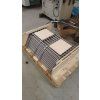
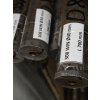
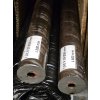
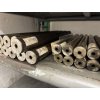
The production of rifle barrel blanks is a complex and highly precise machining process. Barrel blanks represent semi-finished cylindrical components that are later machined into finished firearm barrels by gunsmiths or firearm manufacturers.
The accuracy and durability of the final firearm barrel depend strongly on the quality of the steel used and on the precision of the manufacturing operations performed during production. Modern barrel blank production includes several specialized machining steps designed to achieve a perfectly straight bore and a high-quality internal surface.
Deep Hole Drilling
Deep hole drilling is the first critical step in the manufacturing process. This operation is performed on specialized deep drilling machines designed specifically for producing extremely straight and accurate bores.
A special gun drill is used as the cutting tool. The drill includes an internal channel that supplies high-pressure cutting oil directly to the cutting edge. This oil performs three important functions: lubrication, cooling and removal of metal chips from the drilled hole.
Deep hole drilling is a technically demanding process that requires strict control of bore straightness and surface quality. Gun drills used for firearm barrel blanks typically range from 4 mm to 20 mm in diameter.
One of the major advantages of gun drilling technology is the ability to achieve extremely high depth-to-diameter ratios, sometimes up to 200:1, while maintaining excellent straightness and roundness of the bore. These characteristics are essential for producing accurate rifle barrels.
Drilling Measurement and Inspection
After drilling, each bore is carefully inspected. Measurements include verification of the drilled diameter, geometric tolerances, and surface quality.
Typical drilling tolerances range from –0.02 mm to +0.05 mm depending on the material being machined. Surface roughness after drilling is approximately Ra 1.6.
These inspections ensure that the bore geometry meets the required specifications before further machining operations are performed.
Reaming
Reaming is used to refine the bore after the drilling operation. This process ensures that the internal diameter of the barrel blank is dimensionally accurate and that the bore surface is smooth and uniform.
Reaming tools contain multiple cutting edges that remove a very small amount of material from the bore. Their purpose is to eliminate machining marks left by the drilling process and improve the surface finish.
The reaming operation is carried out on precision equipment similar to deep drilling machines. High-pressure coolant systems are also used to lubricate the cutting process and remove chips efficiently.
During the process, the reaming tool is drawn through the bore while rotating, allowing coolant to reach the cutting edges directly. This ensures a clean machining process and prevents damage to the bore surface.
The result of proper reaming is a highly consistent internal diameter that contributes significantly to the accuracy of the final rifle barrel.
Reaming Inspection
After reaming, the barrel blanks are cleaned and carefully inspected. Measurements include bore diameter, roundness and surface quality.
Typical bore finishes after reaming reach approximately 8 microinches (µin) or better. Straightness of the bore is often verified using calibrated inspection pins to ensure proper alignment throughout the entire barrel length.
Honing and Polishing
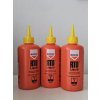
The honing and polishing stage further improves bore accuracy and surface quality. During this operation the barrel blank and the honing tool rotate in opposite directions while a special honing oil is supplied under pressure.
This process gradually removes microscopic imperfections and produces a highly uniform internal surface.
Measurement After Honing
After honing and polishing, the bore diameter and surface finish are measured again. This operation typically achieves a surface roughness of approximately Ra 0.4.
Such a smooth and precise bore surface is essential for achieving consistent bullet travel and high shooting accuracy.
Rifling (Extrusion Process)
The final stage in barrel blank manufacturing is the rifling process. In many cases, this is performed using a cold forming method where the grooves are created by forcing a specially designed mandrel through the bore.
This technology has been successfully used in the firearms industry for decades and is known for producing barrels with excellent accuracy and durability.
The rifling tool is designed specifically for the required caliber and steel type. In modern production, the mandrel feed is often controlled by a servo-driven system that ensures precise and consistent movement during the process.
Thanks to high-precision tooling and controlled forming forces, barrels produced from these blanks achieve outstanding accuracy and long service life.
Final Bore Inspection
Every finished barrel blank undergoes final inspection. This includes checking bore diameter, surface quality, straightness of the bore and the twist rate of the rifling.
Only barrel blanks that meet strict dimensional and quality standards proceed to the next stage of firearm manufacturing.